From Windows 10 to AI-Driven Systems: Tech Transitions Businesses Must Face in 2026
For many businesses, tech transitions are often made reactively. A system slows down. Security alerts increase. Software stops receiving updates. Suddenly, what once felt “good enough” becomes a risk.
As 2026 approaches, organisations of all sizes are facing a convergence of changes that can no longer be delayed. The end of long-standing operating systems, the rapid rise of artificial intelligence, and the shift towards cloud-first environments are not separate trends — they are interconnected transitions shaping how modern businesses operate, compete, and stay secure.
This is not just a technical shift. It is an operational one. And for many business owners, especially those without in-house IT teams, navigating this change can feel overwhelming.
The Aftermath of Windows 10 End of Life
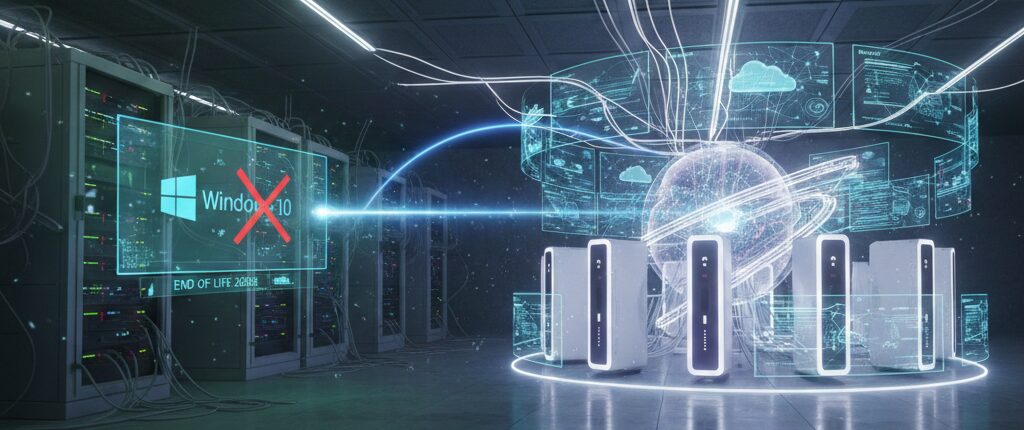
The end of support for Windows 10 marks more than the retirement of an operating system. It represents the close of an era where businesses could rely on familiar platforms for extended periods with minimal change.
Once support ends, systems no longer receive security updates, bug fixes, or technical assistance. This leaves devices exposed to vulnerabilities that are actively targeted by cybercriminals. For businesses handling customer data, financial records, or operational systems, this exposure carries real consequences — from downtime to compliance risks and reputational damage.
Many organisations still rely on Windows 10-based devices across offices, warehouses, healthcare settings, and service environments. Replacing or upgrading these systems is not always straightforward. Hardware compatibility, application dependencies, and staff training all factor into the decision.
What makes this transition particularly challenging is that it coincides with broader shifts in how systems are designed. New operating environments are no longer built just to run software. They are designed to integrate intelligence, automation, and cloud connectivity at their core.
For businesses that delay action, the cost is rarely limited to new licences. It often includes rushed upgrades, productivity losses, and increased exposure during the gap between support ending and systems being modernised.
AI Is No Longer Experimental — It Is Becoming Embedded
Artificial intelligence has moved beyond experimental use cases. What was once limited to large enterprises or research environments is now built directly into everyday business tools — from email platforms and customer management systems to finance, analytics, and cybersecurity.
In 2026, the question will no longer be whether businesses should use AI, but how responsibly and strategically they do so.
AI-driven systems are changing how work is performed. Routine tasks are being automated. Insights are generated faster. Decision-making is supported by predictive analysis rather than instinct alone. For small and medium businesses, this creates both opportunity and pressure.
The opportunity lies in efficiency. AI can reduce administrative workload, improve customer response times, and surface insights that would otherwise require dedicated analysts. The pressure comes from the need to ensure data quality, security, and ethical use.
Importantly, AI adoption is not just about purchasing new tools. It requires modern infrastructure, secure data environments, and staff who understand how to work alongside intelligent systems. Older operating systems and fragmented platforms struggle to support this shift.
Businesses that treat AI as a bolt-on feature risk missing its real value. Those that integrate it into their systems and workflows stand to gain long-term advantages.
Cloud-First Is Becoming the Default, Not the Exception
The move towards cloud-first strategies has been underway for years, but 2026 represents a tipping point. Increasingly, new software platforms are designed to work best — or exclusively — in cloud environments.
This shift is driven by flexibility, scalability, and resilience. Cloud-based systems allow businesses to adapt quickly, support remote and hybrid work, and reduce reliance on physical infrastructure. They also enable faster updates, stronger disaster recovery, and improved collaboration.
However, cloud adoption is not simply a migration exercise. Moving systems without redesigning processes often leads to inefficiencies and unexpected costs. Businesses may find themselves paying for unused resources or struggling with integration between legacy and modern platforms.
Security also plays a significant role. While cloud providers invest heavily in infrastructure security, responsibility for configuration, access control, and data governance still sits with the business. A cloud-first approach must be paired with a clear understanding of shared responsibility.
For organisations transitioning away from ageing systems like Windows 10, cloud adoption is often part of the same journey. Modern operating environments are designed to work seamlessly with cloud services, enabling smoother updates and improved performance.
The Cost of Standing Still
One of the most common misconceptions about technology transitions is that delaying change saves money. In reality, postponement often increases long-term costs.
Unsupported systems lead to higher security risks. Manual processes persist where automation could reduce labour. Outdated platforms limit the ability to integrate new tools or respond to market changes.
There is also a human cost. Staff working with slow or unreliable systems experience frustration, reduced productivity, and burnout. New hires expect modern tools and flexible working environments. Retaining talent becomes harder when systems lag behind expectations.
Regulatory and compliance pressures further compound the issue. Data protection requirements, industry standards, and insurance conditions increasingly expect businesses to demonstrate proactive technology management.
In 2026, businesses that have not addressed these transitions may find themselves reacting to crises rather than planning strategically.
How ICTechnology Helps Businesses Navigate This Change
This is where guidance becomes critical. Technology transitions are not just about selecting new software or hardware — they are about aligning systems with business goals, risk profiles, and growth plans.
ICTechnology works with businesses to assess their current environment, identify gaps, and plan realistic, staged transitions. This includes evaluating device readiness following operating system end-of-life milestones, supporting secure upgrades, and ensuring continuity throughout the process.
As organisations explore AI-enabled tools, ICTechnology helps ensure that infrastructure, data governance, and security foundations are in place before adoption. This allows businesses to leverage intelligent systems without introducing unnecessary risk.
Cloud-first strategies are approached with practicality. Rather than moving everything at once, ICTechnology assists businesses in prioritising systems that deliver the most value when migrated, while ensuring integration and cost control remain front of mind.
Throughout these transitions, the focus remains on clarity and continuity — helping businesses understand what is changing, why it matters, and how each step supports long-term resilience.
Preparing for 2026 Starts Now
The transition from Windows 10 to modern, AI-driven, cloud-enabled systems is not a future problem. It is already underway.
Businesses that start planning early gain flexibility. They can budget appropriately, test solutions, train staff, and make informed decisions rather than rushed ones. Those that wait may find their choices limited by urgency.
Technology should support business momentum, not disrupt it. With the right planning and guidance, these transitions can become opportunities — to streamline operations, improve security, and position the business for sustainable growth.
2026 is not just another year on the calendar. It represents a turning point in how technology underpins business success. The question is not whether change is coming, but how prepared businesses are to face it.
Interested in a Quote and Consultation? Reach out to:
[email protected]
Need Tech Transitions? Please reach out!
[email protected]
Any other enquiries?
Fill out our Contact Form here.
References
Microsoft. (2023). Windows lifecycle fact sheet. Retrieved from https://learn.microsoft.com
Microsoft. (2024). Preparing for Windows 10 end of support. Retrieved from https://www.microsoft.com
Gartner. (2024). Top strategic technology trends. Retrieved from https://www.gartner.com
McKinsey & Company. (2023). The state of AI in business. Retrieved from https://www.mckinsey.com
National Cyber Security Centre. (2023). Guidance on legacy systems and security risks. Retrieved from https://www.ncsc.gov.uk
IBM. (2024). Cloud computing and AI integration. Retrieved from https://www.ibm.com