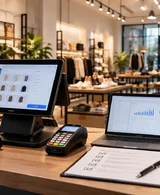
How CCTV and access control help retailers protect stock, staff and premises
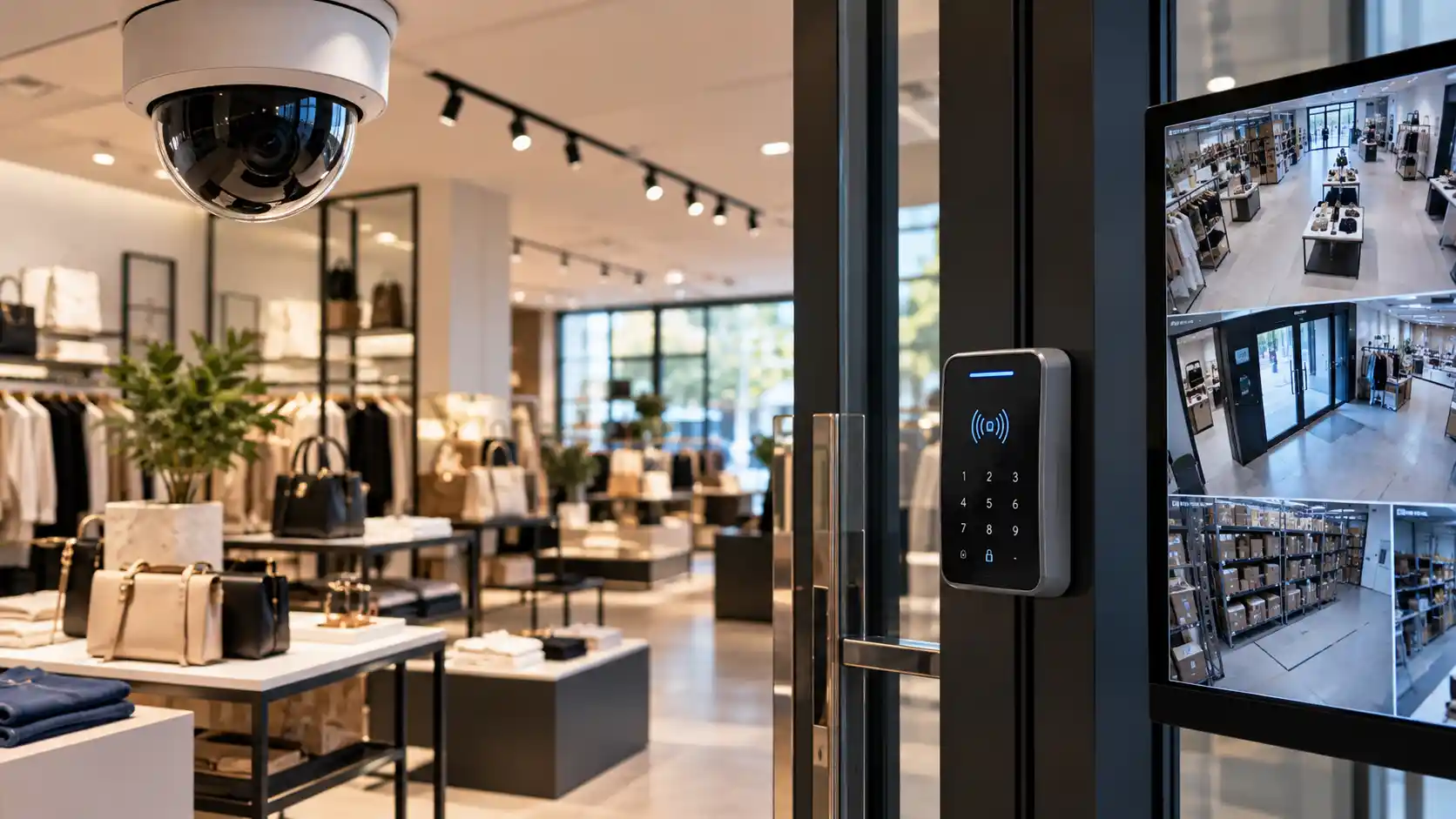
A shop is one of the hardest places to secure. You want the doors open, the aisles inviting and the staff approachable, yet every unlocked door, blind corner and unattended stockroom is a risk. Add after-hours deliveries, shared keys and the odd dispute over what happened at the counter, and security becomes a daily concern.
Recorded crime figures show that 43% of other thefts in 2025 happened at a retail location, and retailers report rising theft and aggression. Professionally designed retail CCTV systems and access control systems for business give owners clear visibility of what is happening and firm control over who can go where. This guide explains how they work together and what to consider.
Key takeaways
- Retail loss prevention works best in layers: cameras show what happened, access control decides who can get in, and monitoring tells you when something is wrong.
- Retail CCTV systems deter theft, speed up investigations and settle disputes, but only if cameras are well placed and footage is stored securely.
- Access control replaces shared keys with individual, time-limited credentials and a record of every entry.
- Remote monitoring security lets owners check live footage and respond to alerts after hours.
- Cameras and door controllers sit on your network, so they need strong passwords, updates and reliable connectivity.
- Privacy and workplace surveillance rules apply, so plan signage, staff notice and footage retention before installation.
Why retail premises are such attractive targets
Retail combines valuable stock, cash and public access. National crime statistics show that 43% of other thefts recorded in 2025 took place at a retail location, involving 247,425 victims.
Staff safety is part of the picture. A 2025 retail industry release reported that 70% of retailers saw customer theft increase and 51% experience physical abuse monthly or more often. The release does not detail its survey method, so treat the figures as indicators.
The quieter risks matter too: unauthorised entry to stockrooms, after-hours break-ins, delivery mix-ups, till discrepancies and disputes where it is one person’s word against another’s. Each one costs money, time and goodwill.
How retail CCTV systems support loss prevention
Retail CCTV systems do three jobs: deter, detect and document. Visible cameras discourage opportunistic theft, live viewing helps staff spot problems early, and recordings provide evidence for police, insurers and internal reviews.
Modern cameras go well beyond grainy footage. Higher resolution captures detail, infrared sees in the dark, and smart motion detection flags activity in restricted zones so nobody has to watch hours of video. Placement matters as much as technology. Entrances, tills, high-value displays, stockrooms and loading areas deserve priority, and a poorly aimed camera is little better than none.
That is why security camera installation is worth doing properly. Lens choice, mounting height, lighting, cabling and storage capacity all decide whether footage is usable when you need it. Cameras also depend on a stable network, and integrated networks reduce downtime across the business.
What access control adds that cameras cannot
CCTV records what happened. Access control reduces the chance of it happening. Access control systems for business use cards, fobs, mobile credentials or biometric readers to decide who can open which door, and when. For retailers, the benefits are practical:
- No shared keys. Each person has their own credential, which can be cancelled instantly when someone leaves, with no rekeying.
- Time-based access. A casual employee can open the shop at 8:30am but never reach the stockroom.
- An audit trail. Entry logs show who went where and when, which helps resolve questions about missing stock.
- Multi-site control. Owners with several stores can manage permissions from one place.
How the two systems work together
| Retail risk | What CCTV provides | What access control provides |
| Shoplifting on the shop floor | Deterrence, live view and evidence | Keeps staff-only areas closed to the public |
| Stockroom theft | Footage of who handled stock | Only authorised people can enter, with a log |
| After-hours break-in | Recorded evidence and motion alerts | Doors lock on a schedule |
| Disputes with customers or staff | Video record of the event | Time-stamped record of who was on site |
| Lost or stolen keys | Not applicable | Credential cancelled in seconds |
Table: how CCTV and access control cover different retail risks
Why remote monitoring security matters outside trading hours
Serious incidents rarely happen when the shop is busy. Remote monitoring security closes that gap. With mobile app viewing, an owner can check a camera from home, confirm whether an alarm is genuine and give police accurate information rather than a guess. Motion alerts from restricted areas shorten the time between incident and response.
It is also a cyber security question. Cameras and door controllers are internet-connected devices, and national cyber security guidance on IoT devices warns that default usernames and passwords are published online, so they should be changed on first use. How hackers target businesses often starts with exactly these overlooked weaknesses.
What it costs when security is an afterthought
The direct loss is only part of the bill. Stock must be replaced, insurers want evidence, and a disputed incident with no footage can drag on for weeks. A break-in can also damage the systems that keep you trading, which feeds into reducing downtime during busy trading periods. Physical access to a back-office computer is a data risk too, so online security for retail businesses and protecting customer data start at the front door.
Practical considerations before you install
A few early decisions save money later.
- Start with a walk-through. Note where stock sits, where cash is handled and which doors are used after hours.
- Plan for privacy. Rules vary by region and by whether you are monitoring customers or staff. The privacy regulator notes that monitoring is generally allowed when staff have been informed, and that local laws cover CCTV. Display clear signs, tell staff in writing and avoid private areas such as change rooms.
- Decide how long to keep footage. Keep recordings only as long as needed, and restrict who can view them.
- Protect the network. Use strong, unique passwords, apply updates and keep security devices separate from public guest access.
- Think about shared infrastructure. Cameras, door readers and point-of-sale often share cabling, so reliable retail Wi-Fi and security should be planned together.
Why a proactive approach beats reacting after an incident
Security installed after a loss costs more than security planned before one, because you pay for the loss as well as the system. Equipment also drifts: cameras get knocked out of position, drives fill up and former staff keep active credentials, so schedule regular reviews. If you are opening a new store, build security into the fit-out, because cabling is far cheaper while the walls are open.
How ICTechnology helps retailers secure stores, stock and staff
ICTechnology has provided system security and CCTV installation to businesses since 2000, and recommends an onsite assessment so the system is designed around your property. Its CCTV packages include remote viewing through mobile apps, motion detection, weather-resistant cameras and pre-fitted recording drives, while its access control services cover smart cards, mobile credentials, biometric readers, time-based restrictions, audit logs and multi-location management.
Because security devices live on your network, ICTechnology also provides 24/7 remote monitoring of IT infrastructure and managed IT support, so the network behind your cameras and door controllers stays healthy. Together, these form one integrated solution. You can learn more about ICTechnology, meet the team or see why businesses choose ICTechnology.
Frequently asked questions
What are retail CCTV systems and how do they reduce theft?
Retail CCTV systems are networked cameras and recorders that watch entrances, tills, stockrooms and displays. They reduce theft by deterring opportunists, helping staff spot problems early and providing evidence for police, insurers and disputes.
Why are access control systems for business important for retailers?
They control who can enter stockrooms, offices and back doors by replacing shared keys with individual credentials and a log of entries. This reduces internal theft and gives you an audit trail when stock goes missing.
How can small retailers improve retail loss prevention on a budget?
Start with a risk walk-through, cover entrances, tills and stockrooms with well-placed cameras, remove shared keys and use app-based remote viewing. Add layers over time rather than buying everything at once.
What are the risks of ignoring retail security?
The main risks are higher theft losses, unresolved disputes without footage, unsafe conditions for staff, insurance complications and longer disruption after an incident. Planning before something happens is usually cheaper than responding afterwards.
Does ICTechnology install CCTV and access control systems?
Yes. ICTechnology states it has provided system security and CCTV installation to businesses since 2000, and offers CCTV packages and access control systems. It recommends an onsite assessment so the system suits your premises.
When should a retailer get professional help with security?
Seek help when you are opening or refitting a store, adding a second site, suffering repeated losses or relying on shared keys. It is also wise if you are unsure your cameras are recording and secure.
Building a store that helps protect itself
Good retail security does not turn a welcoming shop into a fortress. It means knowing what is happening, controlling who can go where and responding quickly. Cameras, access control and remote monitoring do that best as a connected system.
If you are unsure where your premises stand, a site assessment with ICTechnology is a practical first step.
Interested in a quote and consultation? Reach out to: [email protected]
Need help with your existing security system? Please reach out! [email protected]
Any other enquiries? Fill out our contact form here.