How Schools Can Communicate Safely with Parents in a Restricted Social Media Landscape
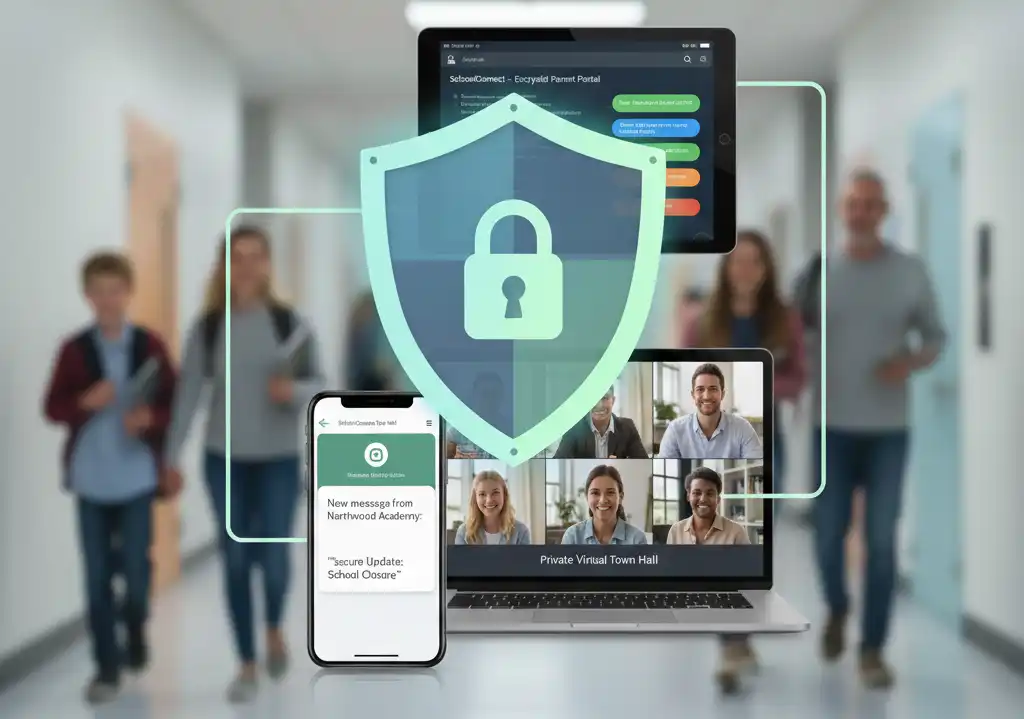
Communicate Safely in School is changing — fast.
What once relied heavily on public social media platforms is now facing growing restrictions, tighter regulation, and increased scrutiny around privacy, child safety, and data protection. For schools, this shift has introduced a new challenge: how to stay connected with parents and communities while operating within increasingly restricted digital environments.
Parents still expect timely updates. Staff still need efficient communication tools. Schools still need to build trust, clarity, and engagement. But the way these outcomes are achieved must now evolve.
This is not simply a matter of choosing different platforms. It is about rethinking how communication systems are designed, governed, and delivered — with parents, students, and long-term trust at the centre.
Why Public Social Media Is No Longer Fit for Purpose
Public social platforms were never built for schools.
They are commercial environments driven by algorithms, visibility, and engagement metrics — not by privacy, duty of care, or compliance. While they once felt like a convenient way to reach families quickly, they now introduce risks that schools can no longer ignore.
One of the most significant issues is loss of control. Messages posted publicly can be reshared, commented on, or taken out of context. Schools have limited ability to moderate discussion, restrict access, or ensure messages reach the intended audience only.
There is also the issue of data exposure. Even when consent is in place, images, names, and updates involving students can remain accessible far beyond their intended lifespan. As expectations around data governance continue to rise, schools are increasingly accountable for how information is stored, accessed, and shared — even when using third-party platforms.
Finally, there is communication inconsistency. Algorithms decide what parents see and when. Important updates can be missed entirely, while less critical posts receive greater visibility. For schools, this creates confusion rather than connection.
As a result, many schools are recognising that public social media can no longer be the foundation of their communication strategy.
The Need of Communicate Safely Without Replacing It
In response to these pressures, some schools have chosen to reduce or withdraw from social media altogether.
While well-intentioned, this approach often creates new problems.
Parents are left unsure where to find information. Staff rely on ad-hoc emails or informal channels. Messages become fragmented, duplicated, or inconsistent. Engagement drops — not because families are disengaged, but because the system lacks structure.
The solution is not less communication but better-designed communication.
Schools need systems that are intentional, documented, and reliable — systems that answer clear questions about who messages are for, where they live, how long they remain accessible, and how compliance is maintained over time.
Moving to Parent-First, School-Controlled Communication
The most effective schools are shifting towards parent-first communication frameworks built on school-controlled platforms.
These environments prioritise:
- Verified access for parents and carers
- Clear ownership of content and data
- Consistent delivery of information
- Reduced reliance on third-party algorithms
- Stronger alignment with privacy and safety expectations
Rather than broadcasting messages publicly, schools are creating secure spaces where communication feels purposeful and relevant. Parents know where to go. Staff know what channel to use. Messages are delivered with confidence rather than caution.
This shift doesn’t remove storytelling — it improves it.
Storytelling Without Social Media: What Changes
There is a common fear that reducing social media presence means losing visibility, personality, or community connection.
In practice, the opposite is often true.
When storytelling moves into controlled environments, it becomes more meaningful. Schools can share stories with context, depth, and intention rather than squeezing messages into short public posts.
This allows for layered communication, such as:
- Brief operational updates for quick reference
- Longer-form stories that explain decisions or celebrate achievements
- Evergreen content that reflects school values and culture
- Targeted communication for specific year groups or communities
Instead of chasing reach, schools build relevance. Instead of reacting to comments, they create clarity.
Consistency and Calm in a Regulated Landscape
Restricted digital environments require schools to communicate with care — especially during sensitive situations.
Whether addressing policy changes, behavioural incidents, safety matters, or broader societal issues, schools must strike a balance between transparency and responsibility.
Structured communication systems support this balance by providing:
- Clear approval pathways
- Defined tone and language guidelines
- Pre-planned templates for high-risk communication
- Reduced reliance on reactive messaging
This approach protects not only compliance, but confidence. Parents receive information through trusted channels, in a consistent voice, with appropriate context. Uncertainty is reduced. Trust is strengthened.
How IC Media House Support Safe School Communication
At the core of modern, compliant school communication is ICTechnology, delivering secure digital infrastructure and strategic communication design through its newest service, IC Media House.
IC Media House is the strategic media and content division of ICTechnology, purpose-built to support organisations operating in high-trust, compliance-sensitive environments — including schools. Rather than producing one-off content or relying on public platforms, IC Media House designs structured, school-controlled communication systems that prioritise privacy, clarity, and long-term engagement.
IC Media House helps schools move away from fragmented messaging and towards cohesive, parent-first communication frameworks by delivering:
- Structured parent communication systems designed for restricted digital and regulatory environments
- Storytelling frameworks that replace public social media with safe, school-controlled channels
- Strategic content planning that ensures consistency, compliance, and engagement
- Integrated communication environments aligned with broader digital infrastructure
By aligning technology, content strategy, and governance under one ecosystem, ICTechnology enables schools to communicate with confidence — protecting student and family data while maintaining meaningful connection with parents and communities.
This is not about adding complexity or more platforms. It is about designing communication systems that are calm, defensible, and built for the long term.
Building Communication Systems for the Future
Restricted social media landscapes are not a setback for schools. They are a signal.
A signal to rethink communication habits.
A signal to prioritise privacy and trust.
A signal to design systems that reflect care and responsibility.
Schools that respond strategically will not only meet regulatory expectations — they will build stronger relationships with parents and communities.
The future of school communication is not louder. It is clearer, safer, and more intentional.
Interested in a Quote and Consultation? Reach out to:
[email protected]
Need IC Media House Services? Please reach out!
[email protected]
Any other enquiries?
Fill out our Contact Form here.
References
Australian Government Office of the eSafety Commissioner. (2023). Best practices for online safety in education. https://www.esafety.gov.au
Department of Education. (2022). Privacy, data protection and digital communication in schools. https://www.education.gov
Livingstone, S., & Third, A. (2017). Children and young people’s rights in the digital age. New Media & Society, 19(5), 657–670.
Organisation for Economic Co-operation and Development. (2021). Education in the digital age: Privacy and governance. https://www.oecd.org
UNICEF. (2021). Children’s data and privacy in digital environments. https://www.unicef.org