Winning the right construction projects through smart SEO
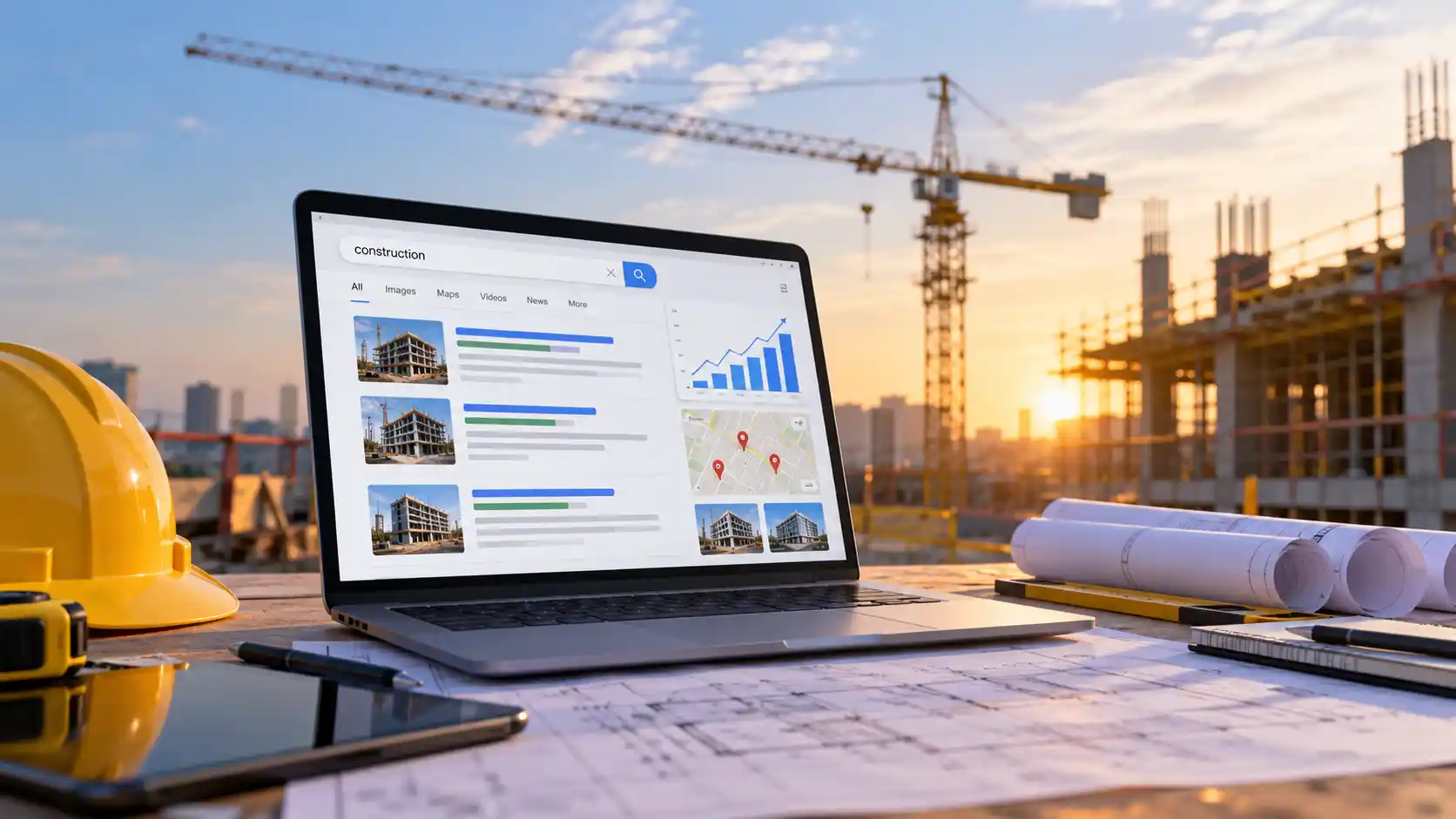
A developer needs a builder for a three-storey commercial fit-out. A homeowner wants a quote for a granny flat. Many of them start in the same place: a search bar.
If your business doesn’t appear, those projects go to someone else, and the enquiries you do get may be poorly matched jobs you’ll never win. Smart SEO helps the right clients find you and contact you about the work you actually want. This article explains how SEO for construction companies works, why local search matters and the steps that turn a website into a steady source of quality leads.
Key takeaways
- SEO for construction companies helps builders appear in front of clients who are actively searching for their services, which leads to better-fit enquiries.
- Local SEO for builders matters because most construction searches include a suburb, city or “near me”, and clients prefer contractors who work in their area.
- Service area pages and specific service pages tell search engines exactly what you build and where, so you rank for the projects you want.
- Commercial construction keywords and residential keywords attract very different clients, so your content should target the work you actually want to win.
- Effective construction lead generation depends on a fast, mobile-friendly website, genuine reviews and helpful content, not just rankings.
Why online visibility now shapes your construction pipeline
Construction is one of the most crowded markets there is. Official business counts from the ABS show 478,651 construction businesses operating at 30 June 2026, more than any other industry. The sector also added 83,004 new businesses in 2025–26, so the field keeps getting busier.
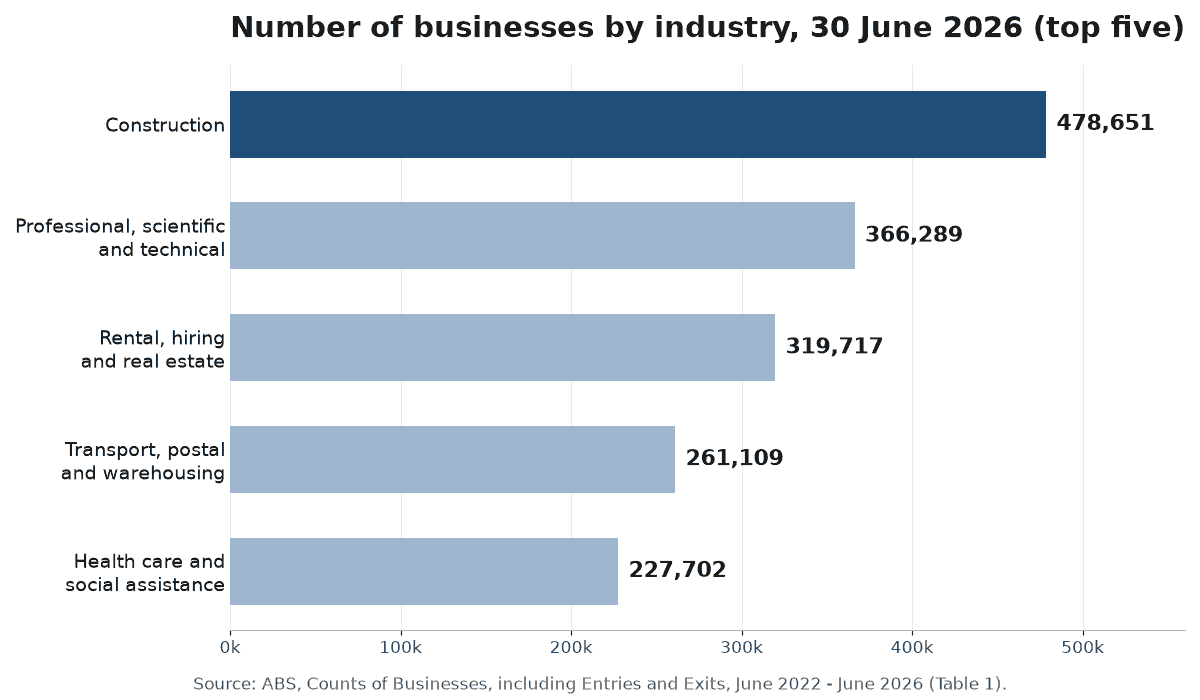
Source: ABS business counts, including entries and exits, June 2022 – June 2026 release
With so many competitors, word of mouth rarely fills the whole pipeline. New clients compare builders online and shortlist the ones they can find and trust. That’s where SEO earns its place in business success: it puts your business in front of people at the exact moment they need you.
What smart SEO for construction companies looks like
Search engine optimisation (SEO) means improving your website and online presence so search engines show it to relevant searchers. For builders, smart SEO targets the right searches, not just more traffic.
Local SEO for builders
Local SEO helps your business appear in map results and local listings when someone searches for a builder in a specific area. A complete business profile, consistent contact details across directories and genuine reviews all strengthen local rankings. Keep them honest, though, because the ACCC’s rules on product and service reviews make it illegal for a business to create or arrange fake reviews.
Service-based and commercial construction keywords
Keywords are the words people type into search. A homeowner might search “bathroom renovation builder”, while a developer searches “commercial construction company”. The terms you target decide which clients you attract.
| Search type | Example search | What the searcher usually wants | Best page to target it |
| Service-based | “concrete formwork contractor” | A specialist for a specific job | Dedicated service page |
| Local | “builder in [suburb]” or “builder near me” | A contractor who works in their area | Service area page |
| Commercial construction keywords | “commercial fit-out builder” | A capable firm for larger projects | Commercial services page with case studies |
| Informational | “how long does a home extension take” | Advice before choosing a builder | Blog article or FAQ |
Service area pages
Service area pages are dedicated pages for each region you work in. Good ones go beyond swapping the suburb name, featuring local projects and the services you offer there, which gives readers and search engines a real reason to value them.
Website content that proves capability
Project galleries, case studies, licences and clear service descriptions all build trust. Content written in plain language with clear, descriptive headings is easier for people to scan and easier for AI search tools to quote accurately.
Common challenges that hold construction websites back
Many builders have a good-looking website and still get few enquiries. Common culprits include:
- One page for everything. A single “Services” page can’t rank for formwork, renovations and commercial fit-outs at the same time.
- Slow, clunky mobile pages. Site managers and clients often search on their phones, so slow loading and hard-to-tap buttons that frustrate users cost enquiries.
- SEO as an afterthought. Retrofitting search features is harder than having SEO built in from the first line of code.
- No tracking. Without measuring calls and form enquiries, you can’t tell which pages bring work.
How poor visibility affects your project pipeline
When the right clients can’t find you, you compete on price for whatever comes through, your team spends hours quoting poorly matched jobs and quiet periods arrive with little warning. Meanwhile, competitors with stronger online profiles pick up the better-margin projects.
Strong visibility works the other way. It brings a predictable flow of enquiries, lets you be selective about which jobs to quote and gives you a website that earns its keep.
Practical steps to build a construction marketing strategy around search
A good construction marketing strategy starts with the projects you want, then works backwards to the searches behind them.
- Define your ideal project. Note the job types, sizes and locations that are most profitable for you.
- Research the right keywords. Check the terms real clients use for your services and areas.
- Create a page for each core service. Explain what you do, who it’s for and show examples.
- Build quality service area pages. Cover the regions you genuinely serve, with local projects and details.
- Strengthen your local profile. Complete your listings and ask happy clients for reviews.
- Publish helpful content. Answer common client questions about costs, timelines and approvals. The SEO essentials every business needs apply here too.
- Measure and refine. Track enquiries, not just traffic, and update pages that aren’t converting.
Government guidance on developing a digital strategy offers a useful template for tying these steps to wider business goals.
Why a proactive approach to SEO pays off
SEO builds momentum over time. Pages gain authority, reviews accumulate and content keeps attracting searchers long after it’s published, so starting before a quiet period means your visibility is working when you need it most.
Search is also changing. AI-generated answers now appear alongside traditional results, and they favour clear, well-structured, trustworthy content. Sites built with modern web development tools that answer questions directly are better placed to appear in both. Plenty of smaller firms have already shown how small businesses can compete with big-business technology, and search is one of the most level playing fields available.
How ICTechnology helps builders get found by the right clients
ICTechnology helps construction businesses improve their digital visibility through smart SEO strategies, website optimisation and ongoing online support that drives more relevant traffic. The team already provides IT support and website maintenance for formwork and structural contractors Future Form and Fastform, so it knows how builders win work.
Its web design and development approach brings together responsive design, SEO specialists and local SEO tailored to help businesses reach customers in their region. Web development services focus on SEO-friendly sites that keep visitors engaged, while digital marketing support adds audits, competitor analysis, content marketing and paid search. For deeper search work, ICDigital’s organic SEO services cover technical audits, keyword strategy, local SEO and AI search visibility, with an emphasis on turning rankings into real enquiries.
With more than 20 years supporting business IT, a team of specialists across IT and development and a proactive, tailored way of working, ICTechnology treats your website as part of your wider business systems.
Frequently asked questions
What is SEO for construction companies?
SEO for construction companies is the process of improving a builder’s website and online presence so it ranks for relevant searches. It combines local SEO, service pages, content and technical fixes to attract the right clients.
Why is local SEO important for builders?
Local SEO matters because most construction clients want a builder who works in their area. It helps you appear in map results and “near me” searches, where clients are often ready to request a quote.
What are service area pages?
Service area pages describe the services you offer in a specific suburb, city or region. They help you rank locally when they include genuine local detail, such as projects completed there.
How long does SEO take to generate construction leads?
SEO usually takes several months to show steady results, depending on competition and your website’s starting point. Local improvements, such as a complete business profile, often help sooner.
What are the risks of ignoring SEO?
Ignoring SEO lets competitors win the clients who search online, leaving you to compete on price for poorly matched work and making your pipeline less predictable.
Can ICTechnology help construction businesses with SEO?
Yes. ICTechnology offers SEO-friendly web design and development, local SEO, digital marketing audits and competitor analysis. It also provides IT support and website maintenance for construction businesses such as Future Form and Fastform.
Building a pipeline of better-fit projects
Winning the right construction projects starts long before the quote, at the moment a client searches and finds your business with clear services, local relevance and proof of quality work.
Pick one service you most want to grow and give it a strong, focused page this month. Small, consistent improvements add up to a website that brings in the projects your business is built for.
Interested in a quote and consultation? Reach out to: [email protected]
Need help with your existing IT systems? Please reach out! [email protected]
Any other enquiries? Fill out our contact form here.