Why SEO Must Be Built Into Web Development and Not Added Later
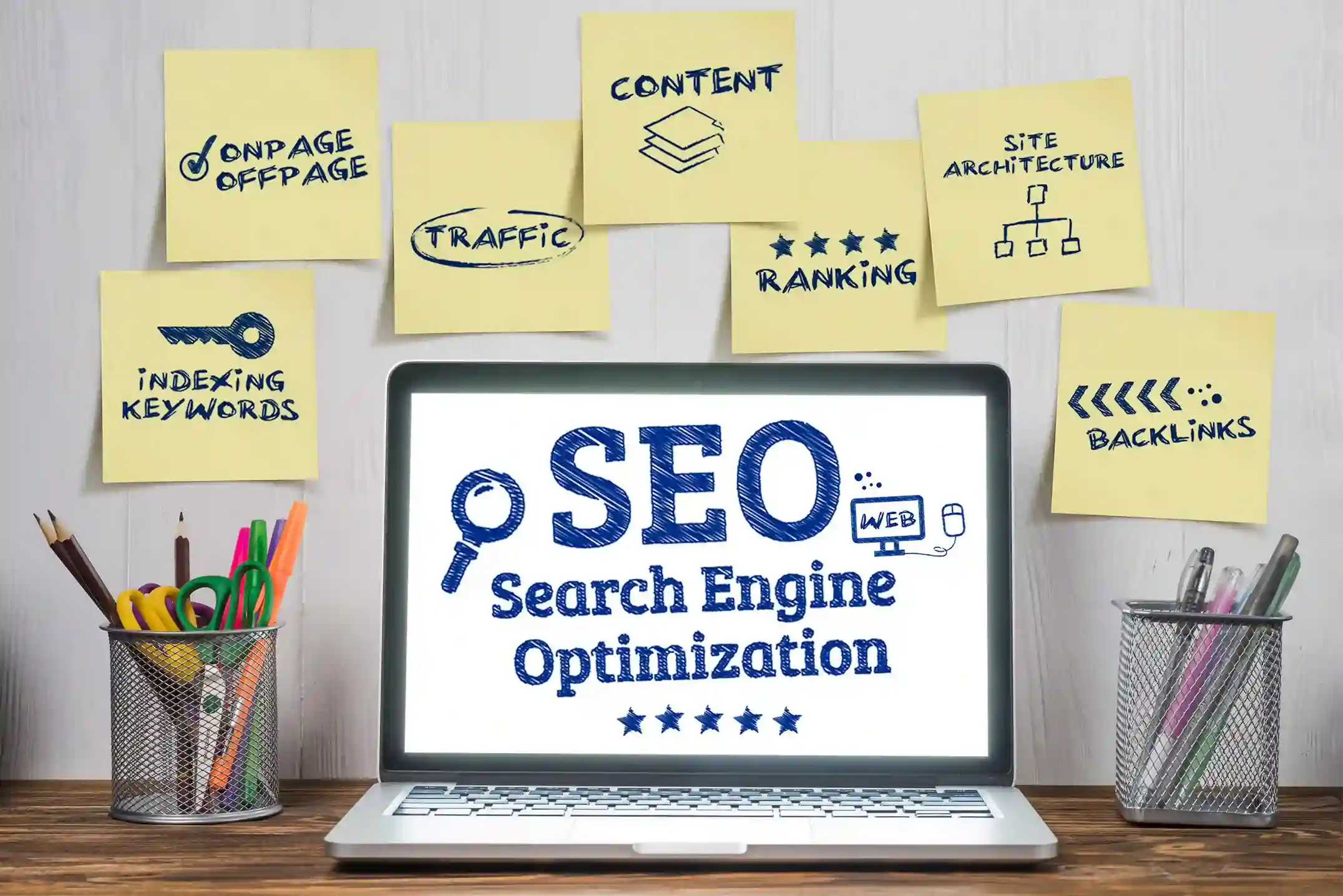
There’s a common misconception that floats around the business world, and it goes something like this: build the website first, sort out SEO later. It sounds reasonable enough on the surface. Get the site up and running, start trading, and once things settle down, bring in someone to “do the SEO”. Job done.
The problem? That’s a bit like building a house and deciding to add the plumbing after the walls are already up. You can do it, but it’s messy and expensive, and you’ll spend more time undoing work than moving forward.
At ICTechnology, we’ve seen this play out more times than we’d like to count. Businesses come to us after launching a website elsewhere — sometimes a beautiful one — only to find it’s not showing up on Google, not converting visitors, and not doing much of anything useful. The site looks the part, but the bones aren’t right.
It’s something our web and app development team deals with regularly. And after working with businesses across a range of industries, from trades and retail to professional services and startups, the pattern is consistent: the ones who struggle most with online visibility are the ones who treated SEO as a separate task to be handled later, rather than a core part of how their website was built.
SEO is not a marketing layer you apply on top of a finished website. It’s woven into the structure of how a site is built — and the people behind ICTechnology built the business around that exact principle. If you’re planning to launch, or you’re already running a business and wondering why your website isn’t showing on Google, understanding the power of SEO for your business could save you a significant amount of time and money.
Your Website’s Structure Is a Ranking Signal
Search engines don’t just read your content — they read how your website is organised. The way pages connect to each other, how URLs are written, whether there’s a clear hierarchy from your homepage down to individual product or service pages — all of this tells search engines what your site is about and which pages matter most.
A site built without this logic in mind tends to end up with a jumble of disconnected pages, duplicated content across URLs, and no clear signal to Google about what the business actually does. You can write excellent content and still not rank if the structure underneath it is a mess.
This is particularly important for small and medium-sized businesses. You’re not competing with unlimited budgets. What you can compete on is a well-structured, well-targeted website that gives search engines exactly what they need to understand your relevance to local and industry-specific searches.
Mobile Optimisation Isn’t Optional
Most people looking for a local service or product will find you on a phone. That’s not a prediction — it’s been the reality for years now. Google also uses mobile-first indexing, which means it primarily looks at the mobile version of your site when deciding how to rank you.
If your website was built primarily as a desktop experience and mobile was treated as an afterthought — resizing things, stacking columns, hoping the layout holds together — you’re likely losing rankings and potential customers at the same time.
Mobile optimisation done right isn’t just about making things fit on a smaller screen. It’s about how quickly the page loads on a mobile connection, how easy it is to tap buttons and navigate menus, and whether the digital experience actually makes sense for someone using a phone. These are decisions made during development, not after launch.
The Real Cost of Retrofitting SEO
Let’s talk money, because this is where the “add it later” approach tends to catch people off guard.
When SEO is bolted onto an existing website, the work involved is often significant. It might mean restructuring URLs — which creates redirect issues if done poorly. It might mean rebuilding navigation to establish proper page hierarchy. It might mean overhauling how images are labelled and compressed, or fixing heading structures across dozens of pages.
Each of these fixes takes time. And in many cases, changes to an existing, indexed website can temporarily affect your rankings while search engines re-crawl and re-evaluate the updated structure. You’re not just paying to fix a problem — you’re potentially disrupting what little traction you’ve already built.
Businesses that factor SEO into the initial build simply don’t face these costs. The work is done once, correctly, as part of the development process. The savings over the first two to three years of a website’s life can be substantial.
User Experience and Search Rankings Are the Same Conversation
Google has become increasingly sophisticated at measuring how people actually interact with a website. It looks at things like how long someone stays on a page, whether they click through to other parts of the site, or whether they hit the back button and go straight back to the search results.
These behaviours send signals. A site that people engage with is a site that Google trusts more.
This means that good web development and good SEO are, in many ways, the same thing. A fast-loading page isn’t just pleasant for the user — it reduces bounce rates. Clear, logical navigation isn’t just easier for visitors — it encourages them to explore more of your site. Readable content with proper structure isn’t just good writing — it helps search engines understand the topic and context of each page.
The businesses that get this right aren’t gaming the system. They’ve just built something that works well, and search engines respond to that.
Technical Decisions That Affect Discoverability
There are a handful of technical build decisions that have a direct impact on how discoverable your website is, and most business owners never hear about them until something goes wrong.
Schema markup, for instance, is code added to a website that helps search engines understand the context of your content — whether a page is about a product, a service, a business location, an event, or a review. When implemented from the start, it can improve how your listing appears in search results, sometimes showing star ratings, prices, or opening hours directly in Google.
Page speed is another one. Search engines factor load time into rankings, and beyond that, a slow website loses visitors fast. Image compression, caching, clean code — these are development decisions that affect both your ranking and your conversion rate.
Crawlability — meaning how easily search engines can move through and index your site — depends on how the site is built. Broken links, poor internal linking, and misconfigured settings can all make parts of your site invisible to search engines, even if the content itself is strong.
None of these are things you add to a website later without cost and complication. They’re built in from the start, or they become problems down the track.
Planning for Organic Growth From Day One
The businesses that grow consistently through organic search are rarely the ones who got lucky. They’re the ones who treated their website as a long-term asset rather than a short-term checklist item.
Organic traffic — the kind that comes from search engines, without paid advertising — compounds over time. A well-built website that ranks for relevant searches keeps delivering visitors month after month, without ongoing ad spend. But it takes time to build that momentum, and the foundation you start with either supports that growth or slows it down.
If you’re launching a business, this is the time to get it right. Not because it’s cheaper (though it is), but because the decisions you make now will shape what’s possible in twelve months, two years, five years. Starting with a site that’s built for visibility means you’re already in the race.
If you’re already running a business and your website isn’t performing, it’s worth asking whether the build itself is the issue — not just the content or the keywords.
How ICTechnology Can Help Build Search Performance Into Your Website
If everything above sounds like a lot to get right on your own, that’s precisely the point. These aren’t things most business owners should have to think about — but someone building your website absolutely should.
This is where ICTechnology’s work comes in. When our team builds a website, search performance is part of the brief from the beginning. The site architecture, the URL structure, the page hierarchy, the mobile responsiveness, the load speed — all of it is considered before a single page goes live. Not as an add-on. Not as a checklist item at the end. As part of how the site is built.
Retrofitting SEO into a poorly built site is one of the most common — and most avoidable — costs small businesses face. Our approach is to make sure you don’t end up there in the first place so that when your site launches, it’s already working for you.
The Foundation You Build Today Shapes What’s Possible Tomorrow
The gap between a website that exists and a website that works is mostly invisible to the eye. Both can look similar on screen. The difference is in the decisions made during development — decisions about structure, speed, mobile experience, technical signals, and long-term growth.
SEO is not something you buy when you’re ready to grow. It’s something you build into a website from the beginning so that growth is possible at all.
For small and medium-sized businesses especially, this matters more than most people realise. You may not have the budget to outspend larger competitors on advertising. But a well-built website that ranks organically for the right searches? That’s a long-term asset that keeps working in the background, month after month, without an ongoing bill attached to it.
The businesses that show up consistently in search results didn’t get there by accident. They made the right decisions early about how their site was built, how it was structured, and what it was optimised for from day one. That’s not a luxury reserved for big brands with dedicated digital teams. It’s available to any business that starts with the right foundation.
That’s exactly what ICTechnology was built to do. With web and app development services that work with small and medium-sized businesses, ICTechnology takes the position that visibility isn’t a feature you add to a website; it’s a result of how the website is built. Every project starts with that thinking, so clients aren’t left trying to fix things that should have been right from the beginning.
If you’re unsure whether your current website is working as hard as it should be, or you’re planning a new one and want to get it right from the start, it’s worth having a conversation with our team before anything is built — not after.
Build it right the first time — because online, your website is always your first impression.
References
Google. (2023). How Google Search works. Google Search Central. https://developers.google.com/search/docs/fundamentals/how-search-works
Google. (2024). Mobile-first indexing best practices. Google Search Central. https://developers.google.com/search/docs/crawling-indexing/mobile/mobile-sites-mobile-first-indexing
Statista. (2024). Share of website traffic coming from mobile devices worldwide from 2015 to 2024. https://www.statista.com/statistics/277125/share-of-website-traffic-coming-from-mobile-devices/
Moz. (2023). The beginner’s guide to SEO. Moz. https://moz.com/beginners-guide-to-seo
Google. (2023). Understanding page experience in Google Search results. Google Search Central. https://developers.google.com/search/docs/appearance/page-experience
Ahrefs. (2024). What is technical SEO? A beginner’s guide. Ahrefs Blog. https://ahrefs.com/blog/technical-seo/
Search Engine Journal. (2023). Site architecture SEO: A complete guide. Search Engine Journal. https://www.searchenginejournal.com/site-architecture-seo/
Google. (2023). Introduction to structured data markup in Google Search. Google Search Central. https://developers.google.com/search/docs/appearance/structured-data/intro-structured-data