Cloud Storage vs Physical Storage: The Smarter Choice in 2026
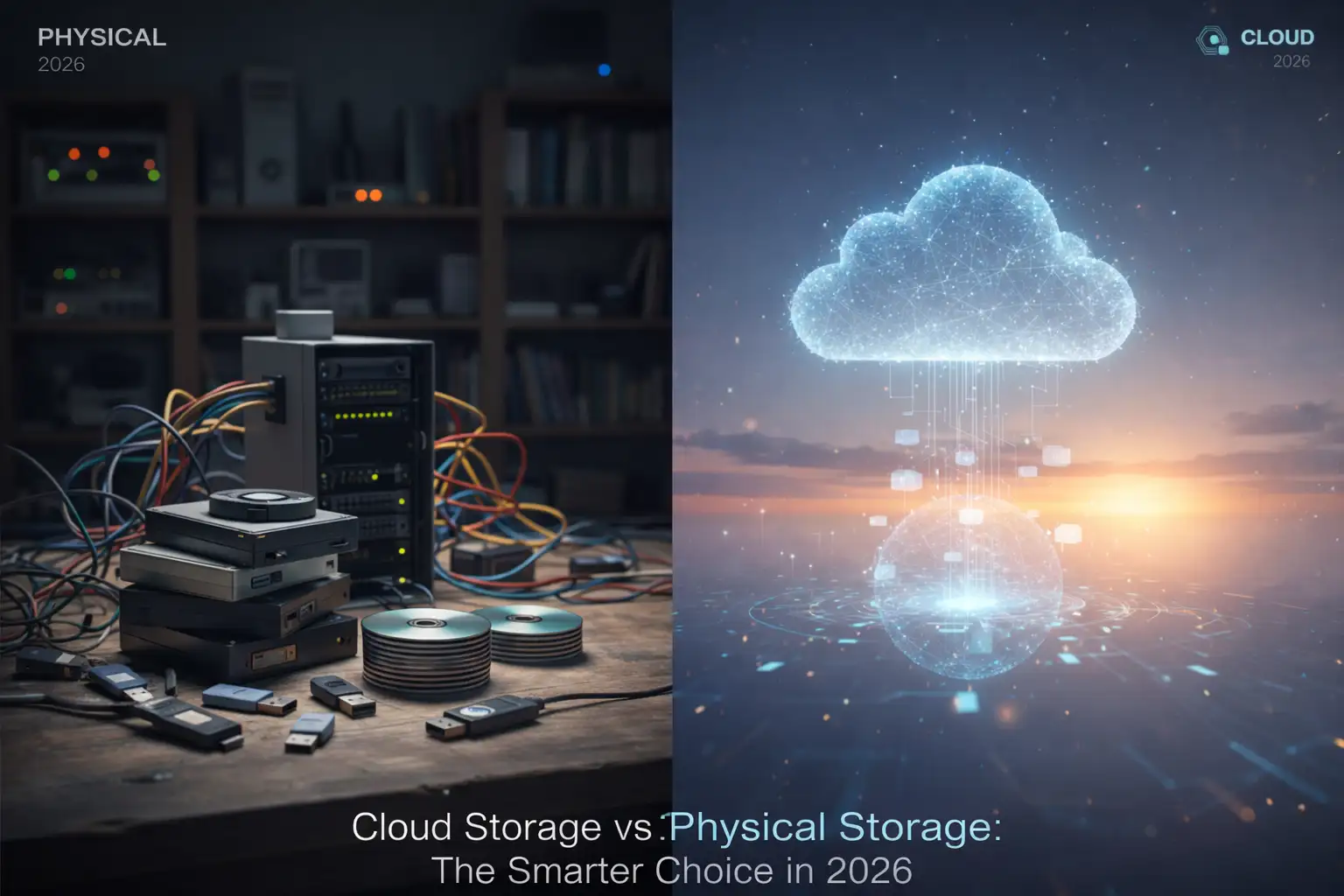
In 2026, data is not just a by-product of doing business. It is the business. From financial records and client contracts to marketing assets and operational systems, nearly every process relies on secure, accessible and well-managed information. For small and medium-sized enterprises, the question is no longer whether to invest in storage. The real question is which approach makes the most sense.
At ICTechnology, our team regularly speak with business owners who are unsure whether to modernise their systems, maintain their existing infrastructure, or move entirely to cloud environments. As a technology partner working across multiple industries, we see firsthand how storage decisions impact productivity, compliance, cyber security and long-term growth. These conversations often begin with a simple question but lead to broader discussions about strategy, risk and operational efficiency.
Cloud storage and physical on-premise storage have both evolved significantly over the past decade. What used to be a straightforward debate has become more nuanced. Costs are shifting, cyber threats are increasing, compliance requirements are tightening, and businesses are operating more flexibly than ever before.
So, which is the smarter choice in 2026?
Let’s break it down properly by looking at cost, flexibility, security, and where hybrid strategies fit into the picture.
Understanding the Two Models
Before comparing them, it helps to clarify what we mean.
Physical storage refers to on-premise servers, network attached storage (NAS), or storage area networks (SAN) located within your office or data centre. Your business owns the hardware and is responsible for maintenance, security, upgrades and backup processes.
Cloud storage involves storing data on remote servers managed by third-party providers. Data is accessed over the internet, typically through subscription-based models. Providers manage infrastructure, uptime and hardware upgrades.
On the surface, cloud appears modern and physical seems traditional. But in practice, both models are still very much in use across different industries.
Cost: Upfront Investment vs Ongoing Subscription
Cost is often the first factor small businesses consider.
With physical storage, the initial investment can be significant. Hardware, server racks, cooling systems, networking equipment, installation and configuration all require capital. Then there are ongoing expenses such as electricity, maintenance, IT support, hardware replacement and security upgrades.
However, once infrastructure is in place, some businesses feel a sense of control. There are no monthly subscription fees tied to data growth, though expansion does require new hardware purchases.
Cloud storage, on the other hand, operates on an operational expenditure model. Businesses typically pay monthly or annually based on storage capacity, data transfer, and additional services such as backup or advanced security features. This makes cloud storage more accessible for startups and growing businesses that prefer predictable cash flow over large capital outlays.
In 2026, the cost comparison is not simply about which is cheaper. It is about which aligns with your financial strategy. For example:
- Businesses with rapid growth may find cloud more cost-efficient due to scalability.
- Businesses with stable data usage and in-house IT teams may find on-premise more predictable long term.
A study by Gartner suggests that cloud spending continues to grow globally, but organisations are becoming more strategic about workloads placed in the cloud, rather than moving everything by default.
The key takeaway is that cost must be evaluated in context. Hidden costs exist in both models. Downtime, poor backups, or data loss can quickly outweigh any savings.
Flexibility and Scalability in a Changing Business Landscape
The modern workplace is no longer confined to one location. Remote teams, hybrid offices and multi-site operations have become normal. This shift has changed how storage is accessed and managed.
Cloud storage excels in flexibility. Employees can securely access files from anywhere with internet connectivity. Scaling storage capacity is typically a matter of adjusting a subscription plan. There is no waiting for hardware delivery or installation.
For businesses that:
- Employ remote staff
- Operate across multiple sites
- Collaborate frequently with external partners
- Need rapid expansion
Cloud storage offers undeniable convenience.
Physical storage can still support remote access, but it requires additional infrastructure such as VPNs, secure gateways and constant monitoring. Expansion involves hardware upgrades, which take time and planning.
That said, some industries require tight control over data location and latency. For example, manufacturing or healthcare facilities running local systems may prefer on-premise storage to ensure immediate access and minimal dependence on internet stability.
Flexibility in 2026 is not just about remote access. It is also about integrating storage with other tools such as business applications, cybersecurity platforms and disaster recovery systems. Cloud providers often offer seamless integrations, whereas on-premise systems require more configuration.
Security: Perception vs Reality
Security remains one of the most debated aspects of cloud versus physical storage.
Many business owners still feel that keeping data “in-house” is safer. The logic is understandable. If the server is in your building, it feels controlled. However, security is not about physical proximity. It is about layered protection, monitoring and expertise.
Large cloud providers invest heavily in cybersecurity infrastructure, encryption, compliance certifications and dedicated security teams. For many small businesses, it would be unrealistic to replicate that level of protection internally.
That does not mean cloud is automatically safer. Misconfigurations, weak passwords and poor access controls remain common vulnerabilities. Cloud security is a shared responsibility between provider and client.
Physical storage security depends entirely on your internal capabilities. This includes:
- Firewalls and intrusion detection systems
- Regular patching and updates
- Physical security controls
- Backup and disaster recovery strategies
- Skilled IT personnel
Data breaches are rarely caused by the storage model alone. They are usually the result of weak governance, outdated systems or human error.
According to reports from IBM, the average cost of a data breach continues to rise globally. For small and medium businesses, a single major incident can be devastating. This reinforces the importance of choosing a storage model that aligns with your risk management strategy.
Security in 2026 must also account for ransomware, insider threats and compliance obligations. Simply having data stored somewhere is not enough. It must be encrypted, backed up, monitored and recoverable.
Performance and Reliability
Another factor often overlooked is performance.
On-premise storage can offer high-speed access within a local network. For applications that require large file transfers or real-time processing, this can be advantageous.
Cloud storage performance depends on internet bandwidth and provider infrastructure. In regions with stable high-speed connectivity, performance is generally strong. However, outages or connectivity disruptions can impact access.
Most cloud providers offer redundancy across multiple data centres, which improves uptime. Physical storage requires businesses to build their own redundancy systems, including secondary sites or offsite backups.
In reality, reliability depends on design. Poorly designed on-premise systems can fail just as easily as poorly managed cloud configurations.
The Rise of Hybrid Storage Models
Increasingly, businesses are choosing not to frame the decision as cloud versus physical. Instead, they are adopting hybrid models that combine elements of both.
In a hybrid structure, critical applications or latency-sensitive systems may remain on-site, while backups, archival data or collaboration platforms operate in the cloud. This approach provides local performance alongside geographic redundancy.
Hybrid storage can be particularly effective for organisations that have already invested heavily in physical infrastructure but wish to enhance resilience and scalability. It also supports regulatory requirements that demand certain data to remain locally controlled while still benefiting from cloud-based disaster recovery.
However, hybrid systems require thoughtful integration. Without clear policies and structured monitoring, complexity can increase and security gaps may emerge. Proper design ensures that hybrid environments remain cohesive rather than fragmented.
How ICTechnology Helps Businesses Make the Right Storage Decision
Choosing between cloud, physical or hybrid storage is not about following trends. It is about understanding operational needs, risk tolerance, growth plans and compliance requirements.
This is where ICTechnology plays a critical advisory role.
Rather than pushing a single solution, ICTechnology assesses each business environment individually. This includes reviewing:
- Current infrastructure and performance
- Data volume and growth projections
- Industry compliance requirements
- Cyber security posture
- Disaster recovery readiness
- Budget structure and long-term strategy
From there, tailored recommendations are developed. For some businesses, this may involve migrating to a fully managed cloud environment. For others, it may mean optimising existing on-premise systems with enhanced backup and cybersecurity layers. In many cases, a carefully structured hybrid solution delivers the most practical balance.
ICTechnology also provides implementation IT support, ongoing monitoring, data protection services and strategic reviews. Storage is not treated as a standalone component but as part of a broader IT ecosystem that includes cyber security, networking, and business continuity planning.
In 2026, informed decision-making is more valuable than ever. Storage architecture should support business objectives, not restrict them.
Future Trends Shaping Storage Decisions
Looking ahead, several trends are influencing storage strategies globally:
- Artificial intelligence and analytics are increasing data volumes dramatically.
- Edge computing is pushing some processing closer to physical devices.
- Sustainability considerations are encouraging energy-efficient infrastructure choices.
- Stronger data protection regulations are demanding clearer governance and audit trails.
Organisations such as International Data Corporation forecast continued global growth in both cloud adoption and data generation. This reinforces the need for scalable and resilient storage strategies.
Businesses that treat storage as a strategic asset rather than a technical afterthought are better positioned for growth.
Making the Smarter Choice in 2026
There is no universal answer to the cloud versus physical storage debate. The smarter choice depends on industry context, growth trajectory, financial structure and risk tolerance.
Cloud storage offers scalability and accessibility. Physical storage offers direct oversight and potentially predictable infrastructure control. Hybrid approaches combine both strengths when designed properly.
What matters most is alignment with real operational needs. Storage architecture should support innovation, protect reputation and enhance resilience. When approached strategically, storage becomes an enabler of growth rather than a background expense.
In 2026, businesses that plan carefully and review regularly will find themselves better equipped to adapt, compete and thrive.
If you are reviewing your current storage environment or planning for future growth, a structured conversation can help clarify the right direction. Speaking with an experienced technology advisor allows you to assess risks, costs and scalability with confidence and without assumptions. You can start that discussion by reaching out to our team here.
References
Gartner. (2023). Forecast analysis: Public cloud services worldwide. Gartner Research. Retrieved from https://www.gartner.com
IBM Security. (2023). Cost of a data breach report 2023. IBM. Retrieved from https://www.ibm.com/reports/data-breach
International Data Corporation. (2023). Worldwide global data sphere forecast. IDC. Retrieved from https://www.idc.com
Statista Research Department. (2024). Global cloud computing market size from 2022 to 2026. Statista. Retrieved from https://www.statista.com
World Economic Forum. (2023). Global cybersecurity outlook 2023. World Economic Forum. Retrieved from https://www.weforum.org/reports/global-cybersecurity-outlook-2023